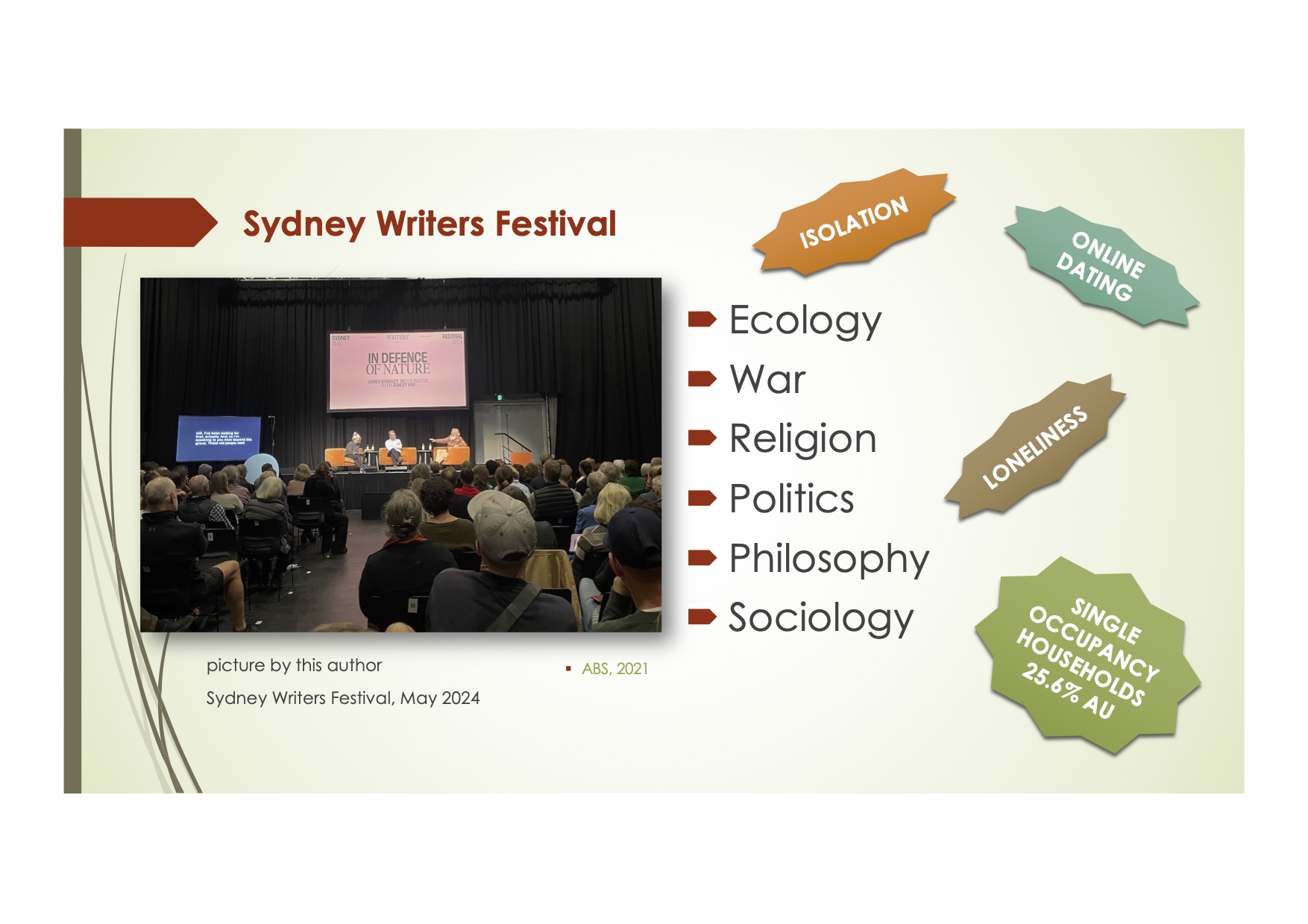
I was at the Sydney Writers Festival in May 2024, and we discussed a world in pain.
We spoke at length about the effects of global warming, the devastation of wars, radical religious and political views. Ways of thinking around prejudices and inequality that we thought were disappearing but are rising again. We talked about isolation, that in Australia, 25% of households are of single occupancy, and that online dating doesn’t seem to be working very well. (ABS, 2021)
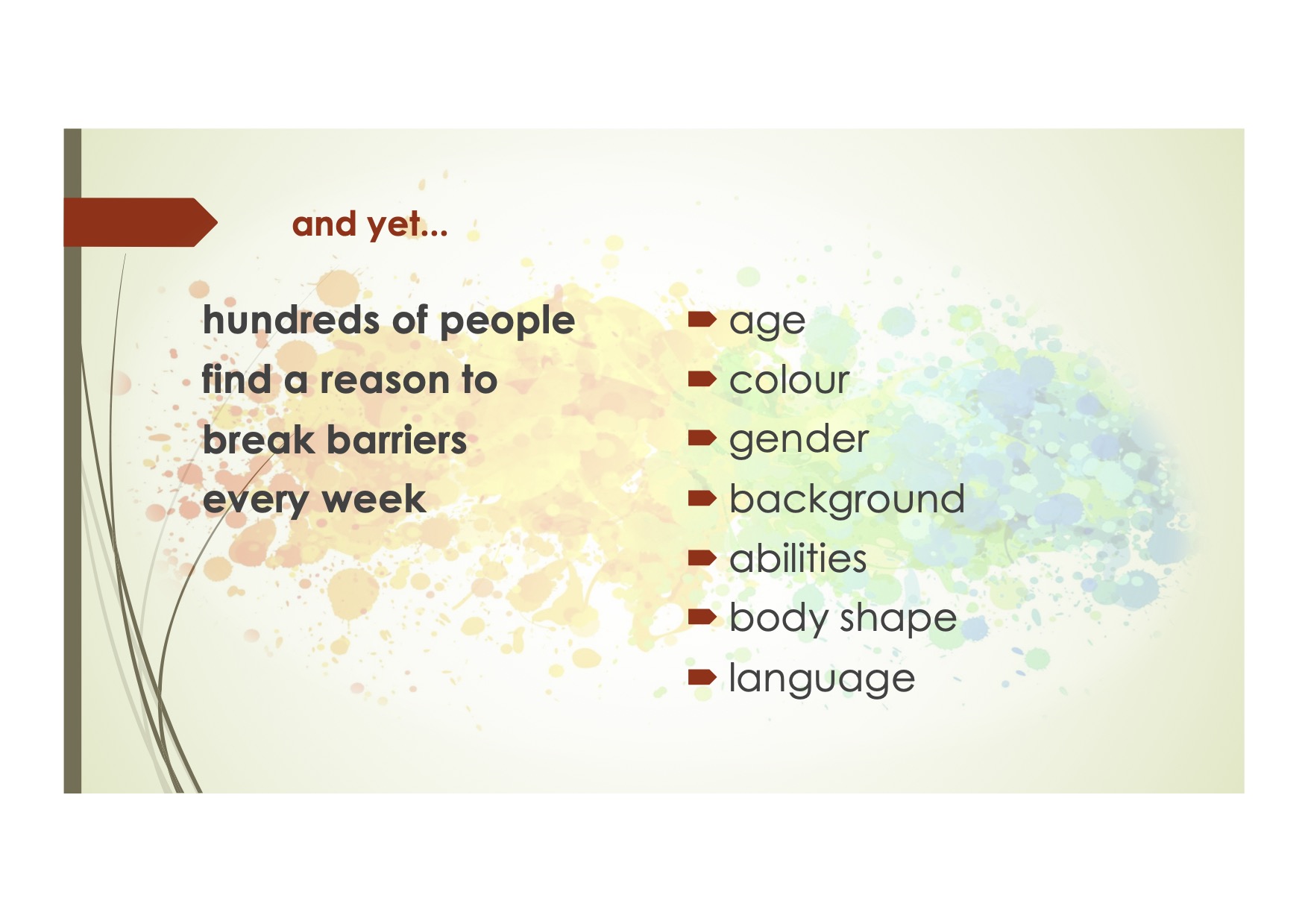
And yet, I go out every week, I meet and see hundreds of people who break barriers of age, colour, gender, background, abilities, body shapes… People who speak different languages and “would never be in the same room if not for one reason”, to invite each other… to dance…
In 2024 I was honoured to be accepted into a Master of Research program at Macquarie University, in Sydney, Australia. This is my Thesis:
Dancing with Diversity – Mapping the Evolution and Impact of Latin Dance in Australia
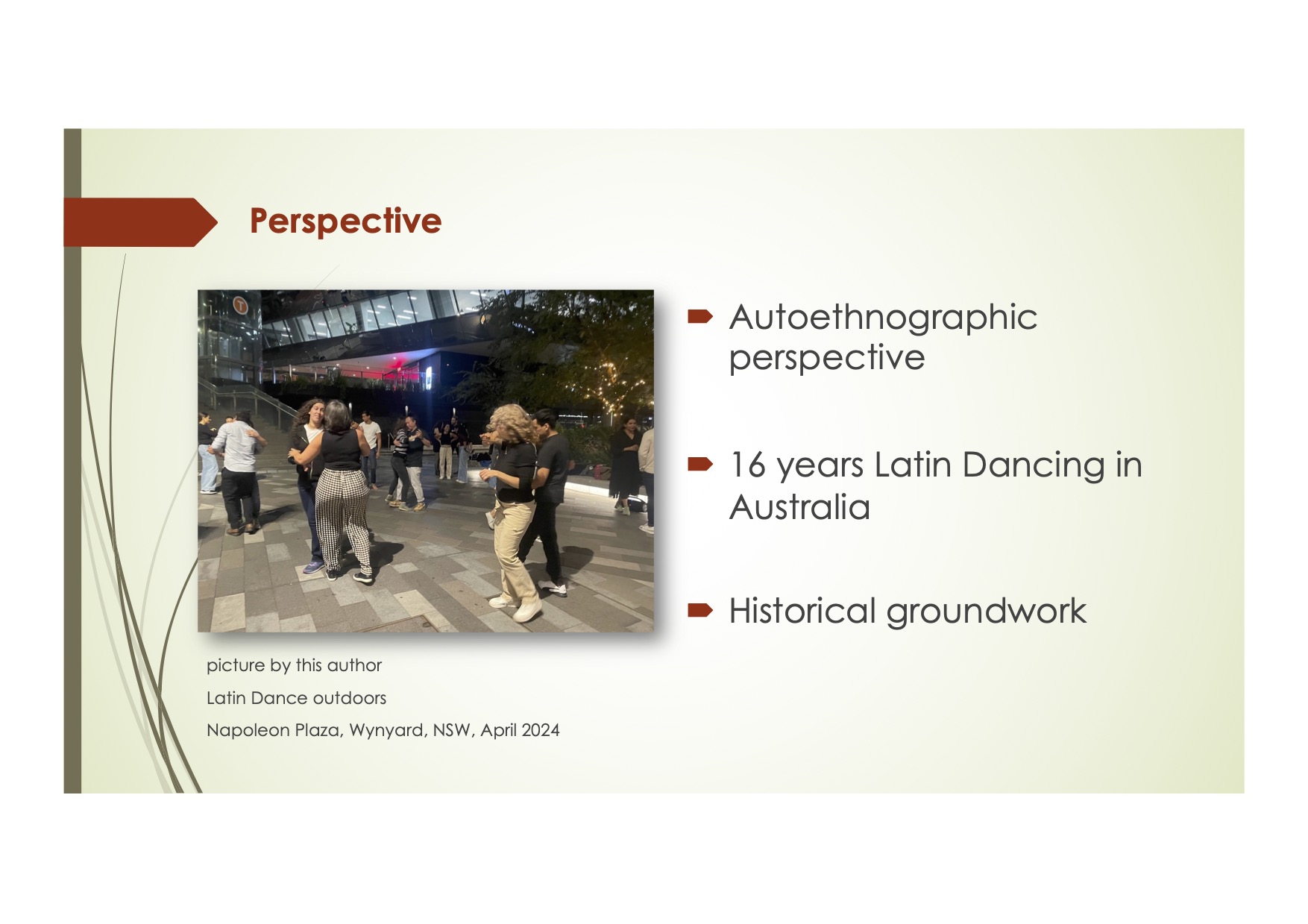
I grew up dancing ballet, jazz and contemporary in Brazil. When I came to Australia, I worked as a school manager at a Latin Dance company and fell, with passion and sometimes obsession, in love with Latin Dance. Immersed in the Australian Latin Dance community since 2005, I possess a unique vantage point to document central yet underrepresented events that have shaped the global Latin Dance community through an autoethnographic perspective.
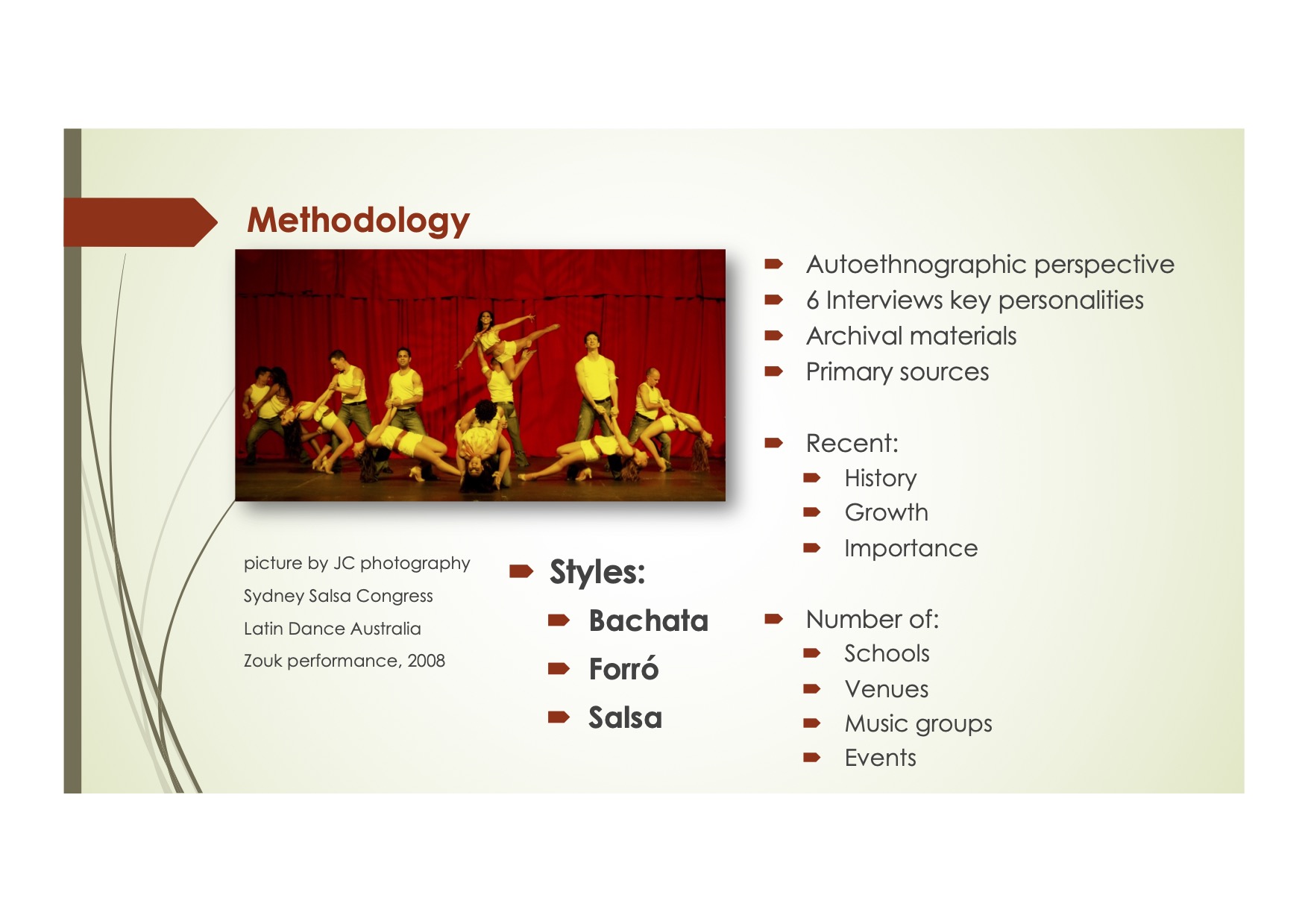
In order to explore and analyse the Latin Dance sector, I engage in an ethnographic fieldwork practice. I will undertake interviews with 6 key personalities in the Latin Dance Scene who established companies and events in Australia. The interviews, analysis of archival materials and primary sources available will enable me to research and write the recent history of Latin Dance in Australia.
For my Master of Research project, I am mapping the current number of Latin Dance Schools, Venues, Music groups, and Events, in the community. I am focusing on 3 Latin dance styles: Bachata, Forró and Salsa. They are representative, most dancers dance at least one of these styles. Lastly, Sydney has regular parties, events, classes and groups for Salsa, Bachata and Forró.
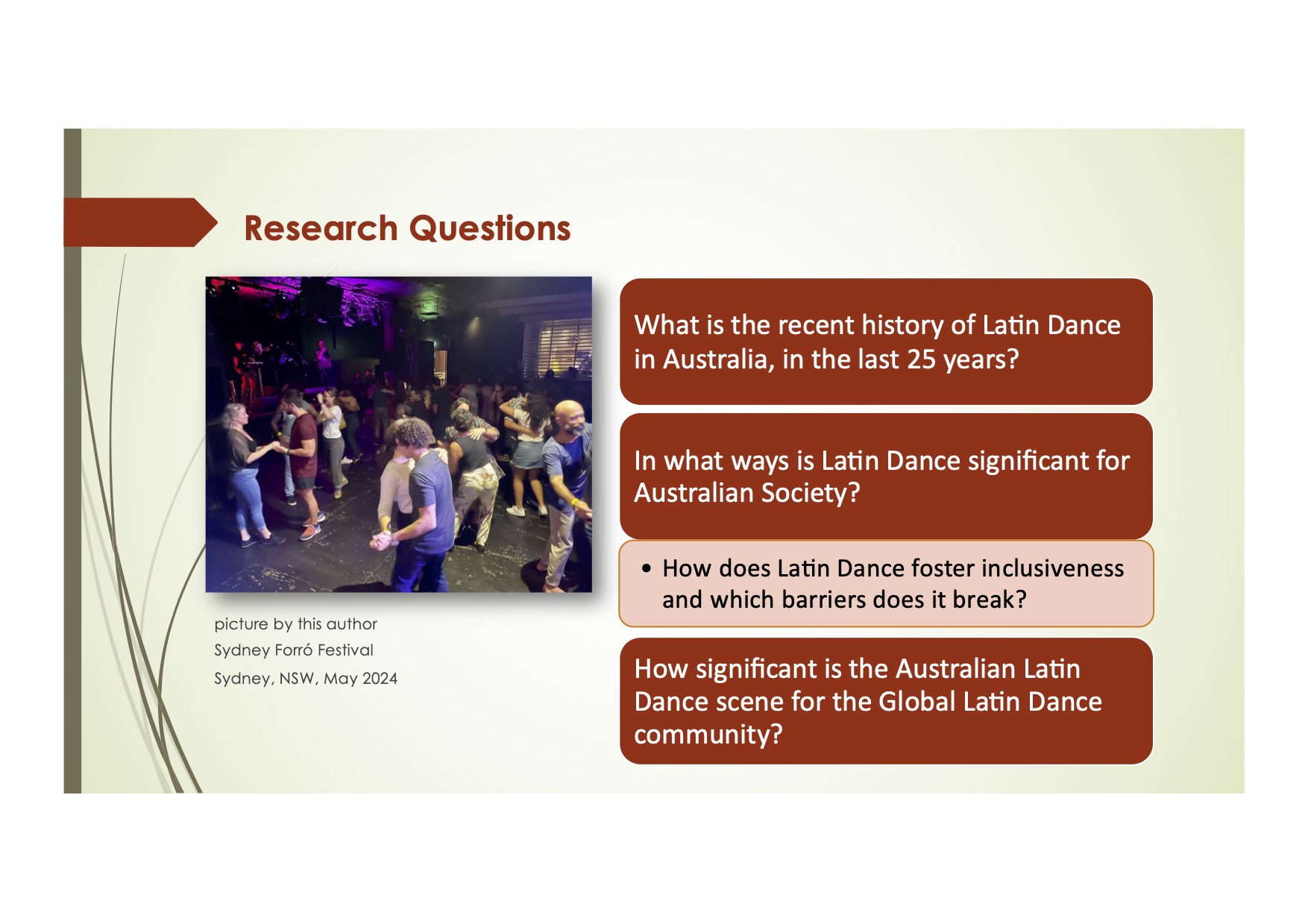
My research questions are:
- What is the recent history of Latin Dance in Australia, in the last 25 years?
- In what ways is Latin Dance significant for Australian Society?
- How does Latin Dance foster inclusiveness and which barriers does it break?
- How significant is the Australian Latin Dance scene for the Global Latin Dance community?

Latin Dance came from Humble origins as documented by various scholars. Dormani; Carwile; Delgado; said that it was originally danced by the lower classes;Salsa scholars Cabanzo, Hutchinson, and Dormani, documented that it came out of the Latin American “barrios”, the immigrants’ hoods of America. Brazilian specialist in Forró, Fernandes, mapped a similar trajectory for the style when it came from the drought driven Northeast of Brazil to conquer the whole country.
The various styles became accepted by the middle and upper classes and took the world by storm creating a widespread fever, documented in literature by Borland, Wilson, and Sloat, to name a few.
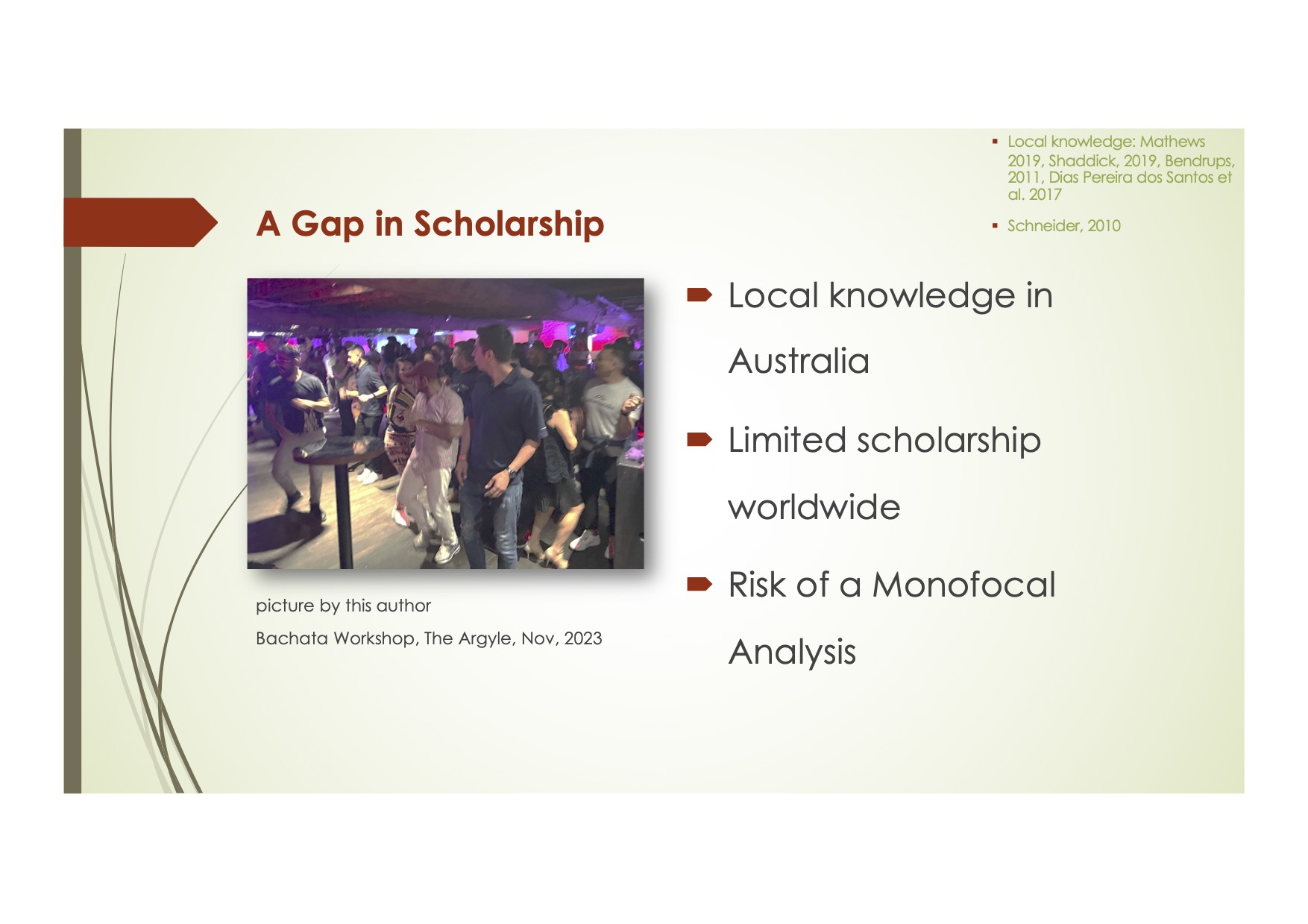
There is a fair amount of Literature on Latin Dance, particularly overseas, but the academic discourse on the history of Latin Dance in Australia is limited, leading to a concentration of knowledge in specific styles and regions: such as Mathews’ PhD thesis on Samba de Gafieira, Couple Samba, with Rio Rhythmics Academy in Brisbane; Samba Queen Lillian Shaddick’s Master’s about Samba no Pé, individual Samba, in Sydney, Bendrups who writes on Latin Music and Dance in NZ and Australia.
This scarcity necessitates caution among scholars to avoid monofocal analysis. However rich the literature worldwide is, it’s not a widespread coverage, and where there are gaps, there are risks. That’s why we need more research and more literature, with more rigour. My research contributes original knowledge to this gap.

The media practically ignores Latin Dance.
In this gap I hope to register some significant events and accolades that Australia has earned, and are unregistered. Such as:
- The Sydney Salsa Congress that in 2009 had parties with about 4000 people on one dancefloor.
- The Sydney Bachata Festival created in 2008, still running, that was the first International Bachata Festival in the world, and their creators were awarded by the government of the Dominican Republic for their contribution to the Dominican culture.
- The concept of Brisbane as the Brazilian Dance Mecca outside of Brazil; mentioned by Mathews in her PhD thesis.
- And the many international Samba, Salsa, Bachata, Reggaeton champions Australia has.
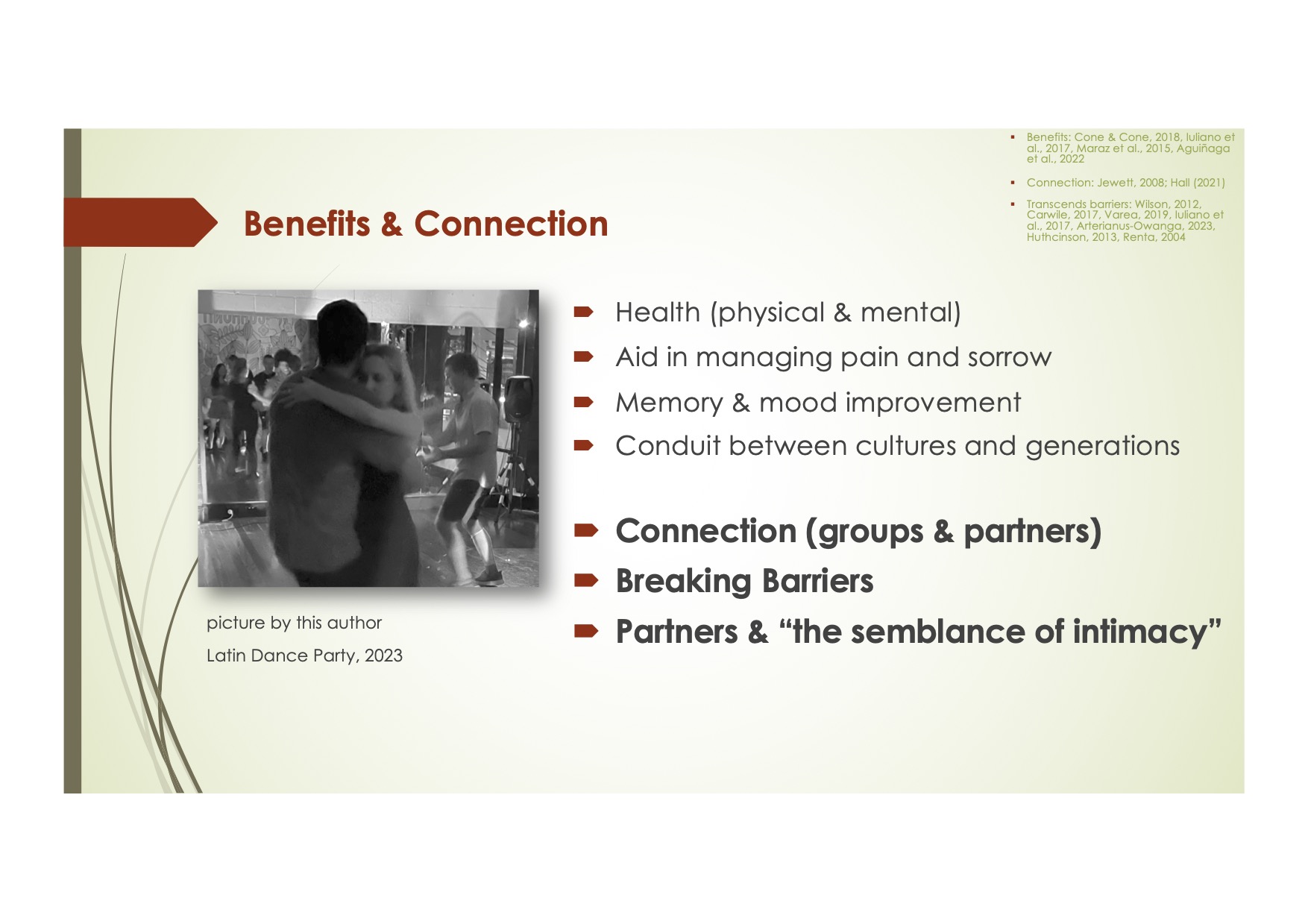
In a Post-Covid World, of lone households, where many people are so hungry for connection, I believe Latin Dance has much to offer. The benefits of dance have been documented in literature, for mental and physical health, for community, to serve as a conduit between cultures and generations. Studies in articles by Cone & Cone, Iuliano and others, Maraz and others, Aguiñaga and others, are a few specific to Latin Dance.
But the aspects that most fascinate me are the powers of connection, the breaking of barriers I mentioned at the start, and that scholars have registered, Wilson, Carwile, Varea, Arterianus-Owanga, Huthcinson, Renta, have written about this across the globe. Ethnographer Jewett calls the strong connection between couple dance partners, a “semblance of intimacy”, and that is another point for exploration in my research project.
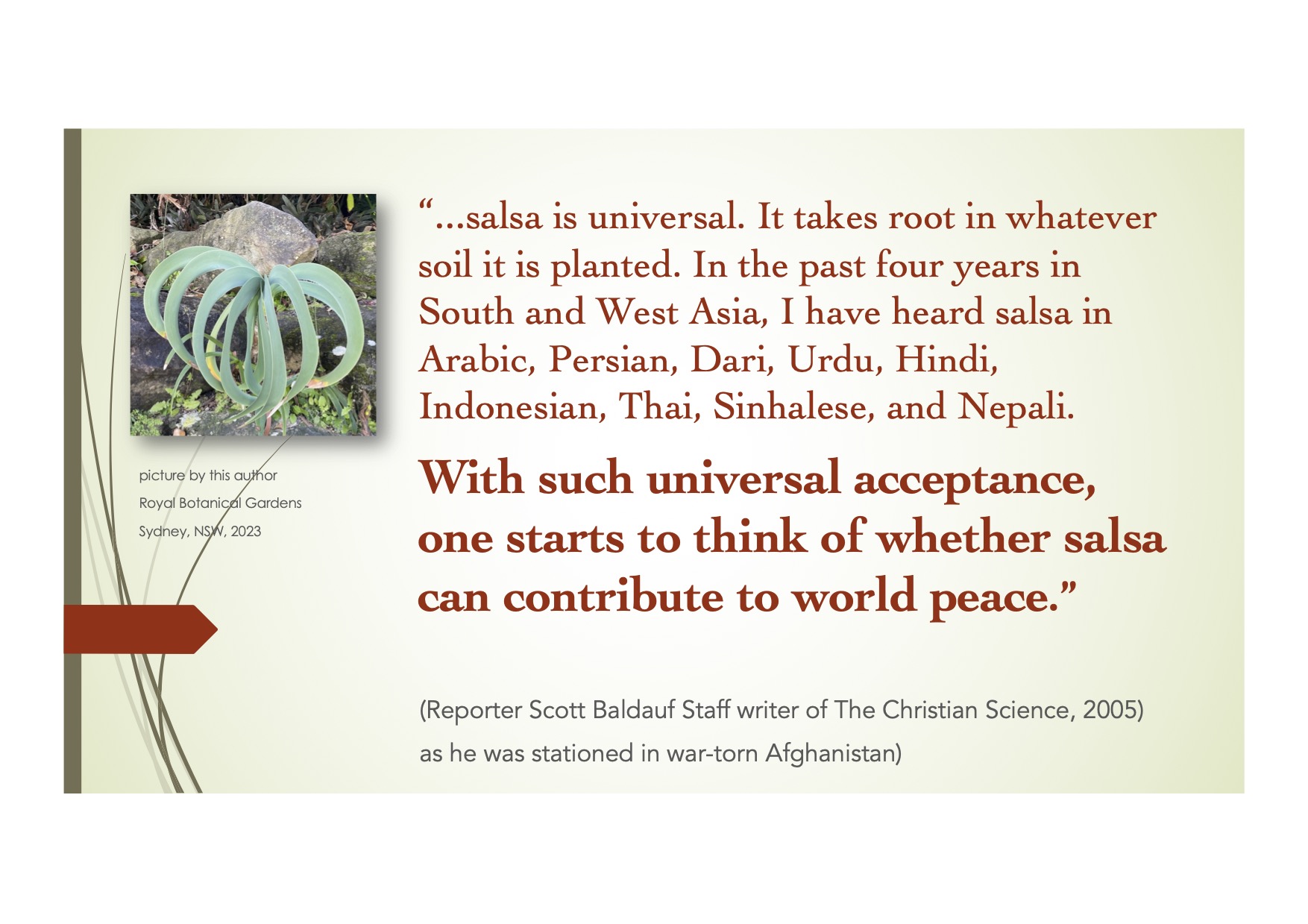
In this power of connection may lie great potential. I agree with this reporter who was listening to salsa in many Eastern languages in the middle of a war region, and thought that Salsa could contribute to world peace.

On the dancefloor, I find what the author Julia Baird calls a sense of awe, in her bestseller “Phosphorescence”, I find it watching other dancers, through the intimacy of my dances, the connection with the community and the people. That is why I keep going back to the dancefloor, to seek connection, to experience the complexities of multiculturalism, inclusion, and the beauty of a world united.
This is what I want to foster with my thesis, create a groundwork by studying and highlighting the benefits of Latin Dance to society in Australia, contributing to the global dialogue and stimulating future conversations.
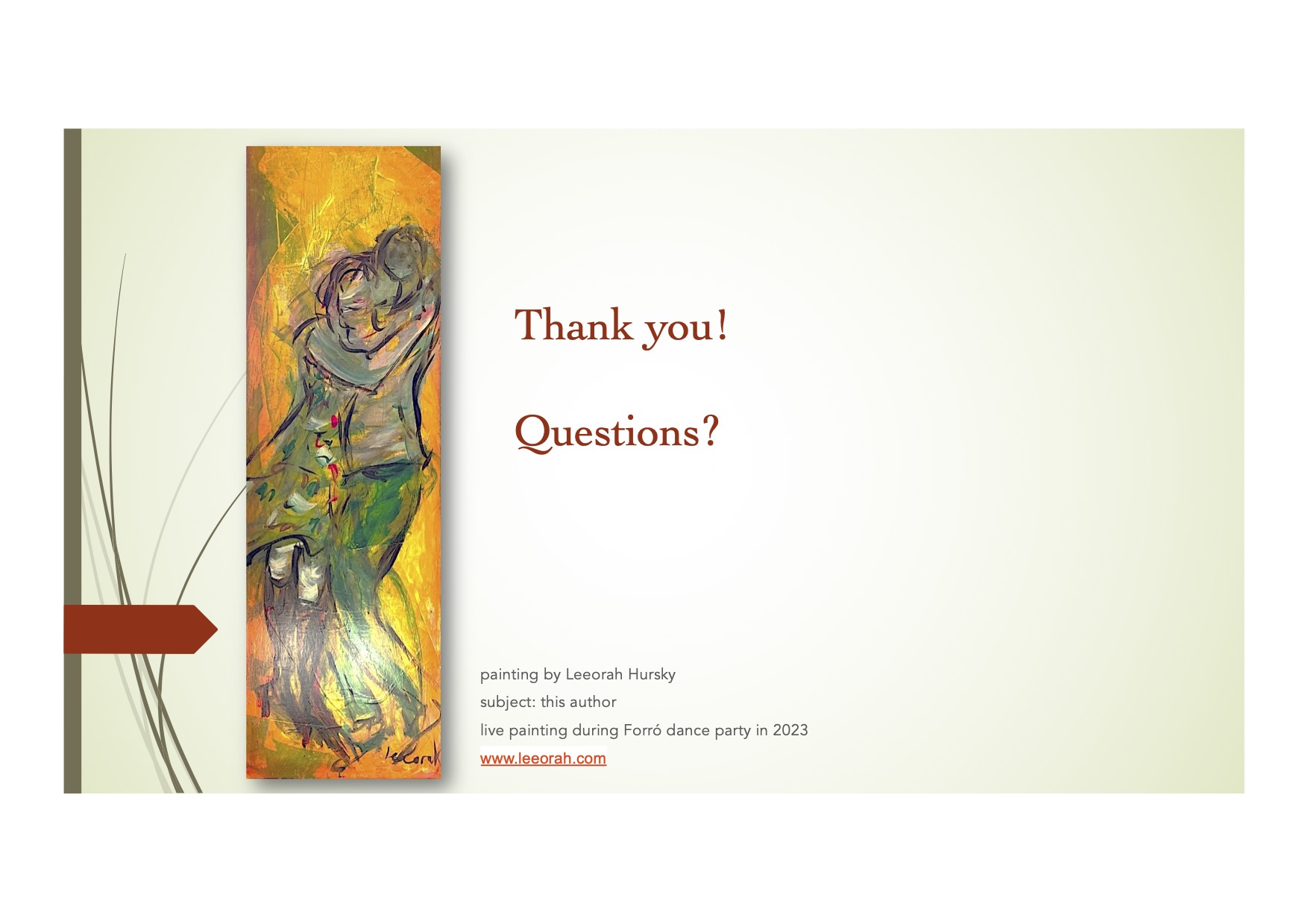
For any questions, my student credentials are:
Master of Research – 2nd Year – Faculty of Arts | MCCALL – Macquarie University – Sydney, Australia
tania.crivellenti@students.mq.edu.au – tania.crivellenti@hdr.mq.edu.au
The Department of Media, Communications, Creative Arts, Language, and Literature (MCCALL) is one of the largest and most diverse departments at Macquarie University.
 taniacreations.com
Pingback: Finding Balance: Master, Work, Podcast – writtenlife.me